
Computers
i486 DX 100
This is where it started - An i486 DX 100.
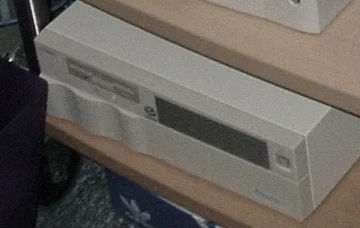
It was a hand me down Christmas gift, circa 1996. It was installed with MS DOS and Windows 95, which was loaded using a stack of 1.44MB floppy discs, because a CD ROM drive was a luxury I didn't have. It had around 8MB of RAM and a 500MB hard drive.
In those early years it was primarily used to play games like Full throttle, Quake and Grand Theft Auto. I'm sure there were more, but those are the ones that created a lasting memory.
Pentium II and multiplayer
A few years would pass and my brother would now have his very own computer - an Intel Pentium 166. My 486 would also be upgraded to a Pentium II 233Mhz. Most of the parts would be sourced from the weekly computer fairs in London Tottenham Court Road, which my dad, brother and I would frequent. For a teenager, the computer fair was an exciting bazaar of interesting things to look at and a place to ask questions. I was always intrigued by the boxes of what appeared to be circuit boards, which turned out to be various types of 3Com network cards. It was at this moment we began to wonder how we could connect our own computers. At the time we were both heavily into Quake, and so naturally we wanted to know more about networking and how we could play over a LAN.
We purchased a parallel cable during one of our trips to the computer fair and would attempt to connect our computers when we got home. After some messing around and not really knowing what we were doing, we finally managed to connect our computers using IPX/SPX. It's one of the most magically moments in my computing history - loading up quake and seeing my brother ON MY SCREEN. It was pure joy. We would go on to spend many years playing Quake, refining our skills online over 56k dial-up. Much fun was also had playing Grand Theft Auto, which caused quite a few heated 'discussions' when someone would hog the rocket launcher and control the game.
3D graphics cards were starting to become a thing and we would upgrade from a Diamond Edge 3D, Matrox Mystic to 3dfx Voodoo 1 and 2 cards as the technology progressed.
Networking
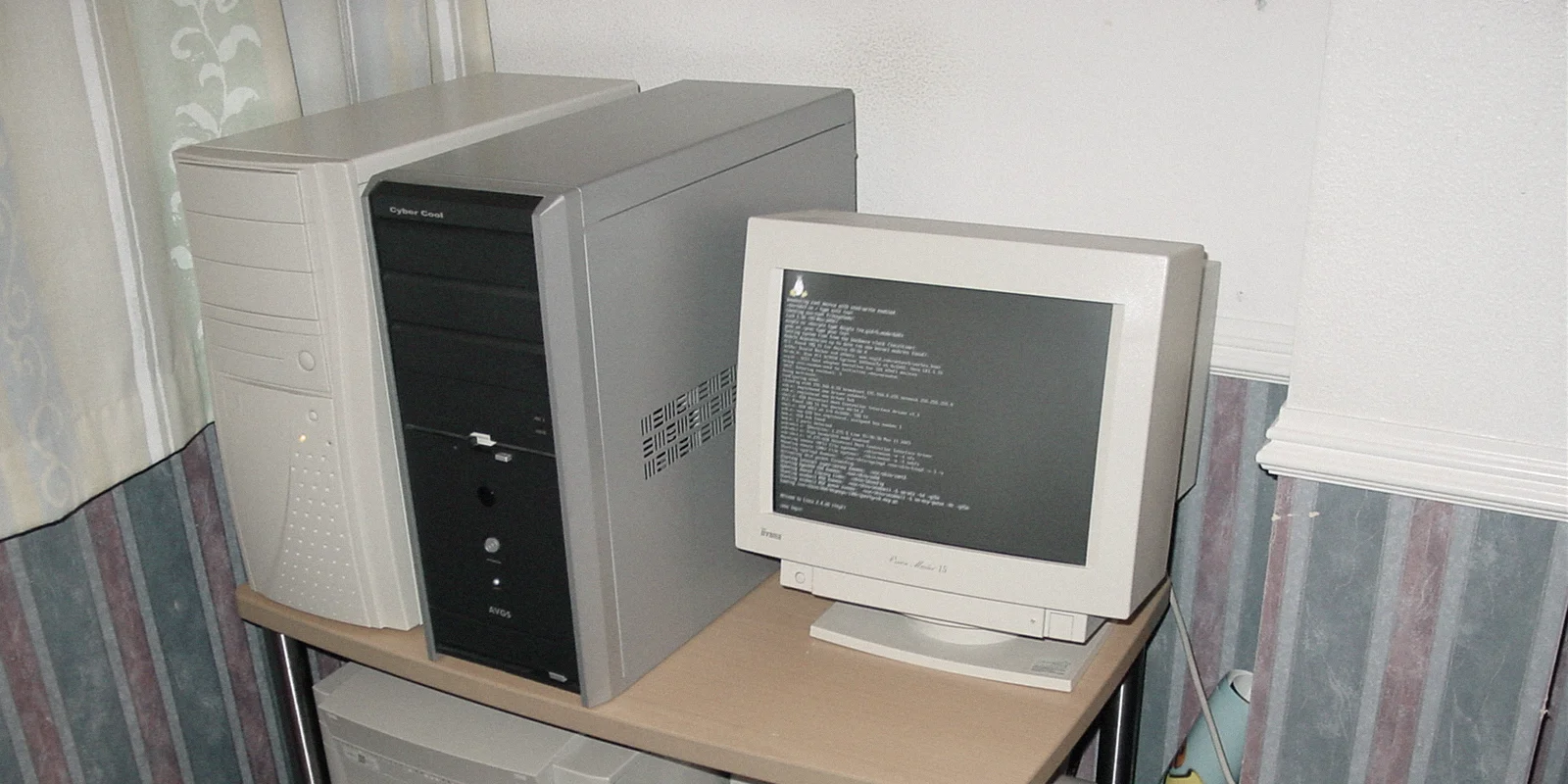
It's around 2001 and we've started to collect a few spare computers after various upgrades. The two towers here I believe are the Pentium and the Pentium II, both running Slackware Linux. We've out grown the parallel cable and we're now running over ethernet using a Netgear EN104 hub, capable of transferring data at a whopping 10Mb/sec. Cable Internet is new to residential consumers and we have a Blueyonder cable Internet connection from Telewest, which can download at 512/Kb/sec. The 486 is quietly chugging away with it's passive cooling, acting as a gateway to the Internet, running SmoothWall Linux. It would later be upgraded to IPCop Linux, which was a fork of SmoothWall.
AMD Athlon XP
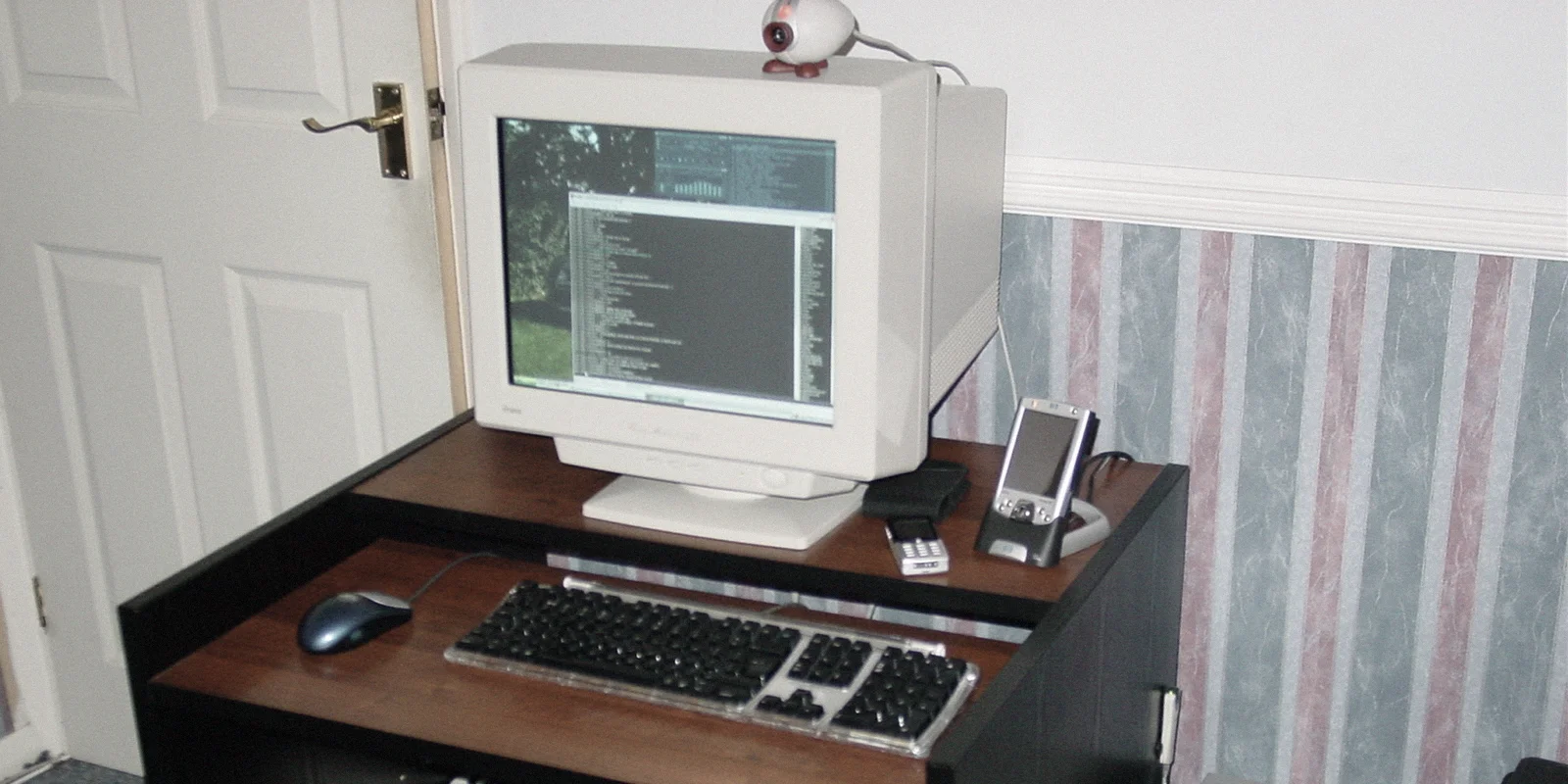
It's circa 2001 and the main computer has been upgraded to an AMD Athlon XP CPU. Case modding is in and Lian Li have released the first ever brushed aluminium case - the P60. Blue LED's are new and a must have. I upgraded my bland beige tower to a beautiful Lian Li P60 with a faux carbon fibre strip at the top. I bought myself an Apple keyboard with a transparent casing. The monitor is an Iiyama VisionMaster Pro 17 inch.
On the desk I have a Hewlett Packard IPaq pocket computer, running Windows mobile. It didn't have a wifi connection but it could synchronise email and files when connected to the PC via a cable. The phone is a Sony Ericsson T610.
Intel Core Duo
Somewhere between 2001 and 2013 the AMD Athlon XP would be upgraded to an Intel Core Duo based system. Unfortunately I don't recall all of the specs, but in 2010 I upgraded to a GeForce GTX 260 with 896MB GDDR3, and paid £127.18. It was a pretty high-end card for the time and it's interesting to see the price of a top end card compared to what a Geforce RTX 5080 currently costs today, which is £999.98.
Intel Core i7
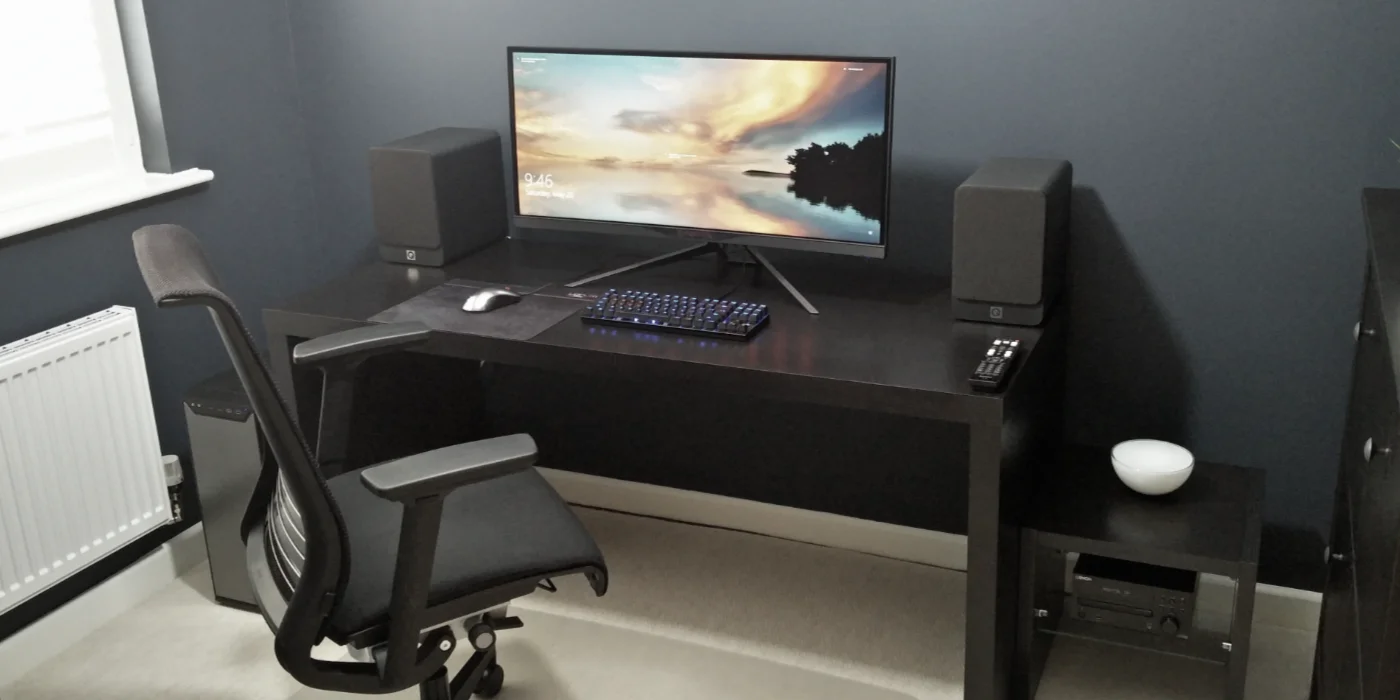
Fast forward to August 2013 and I would place an order for a new PC. Here's the specs.
| Component | Detail |
|---|---|
| CPU | Intel Core i7-3770K 3.50GHz (Ivybridge) Socket LGA1155 |
| RAM | Crucial Ballistix Tactical Tracer 16GB DDR3 PC3-12800C8 |
| GPU | MSI Geforce GTX 770 Gaming Edition 4096MB GDDR5 |
| Storage | Samsung 256GB SSD 840 PRO SATA 6Gbs |
| Motherboard | Gigabyte Z77-DS3H |
| Case | Antec P280 Super Midi Tower Case - Gun Metal Black |
| Cooler | Corsair Hydro H80i High Performance Liquid CPU Cooler |
| PSU | Corsair 2013 Edition Gamer Series GS 600W |
The Antec P280 was a super clean case and I loved the minimalist aesthetics. The monitor is an Acer Predator X34 and the speakers are Q Acoustic 2020i's, paired with a Denon RCD-M39DAB amplifier.
In June 2015 I upgrade the graphics card to a MSI GeForce GTX 980Ti at a cost of £587.39.
The chair is a Steelcase Think.
AMD Ryzen 9 3900X
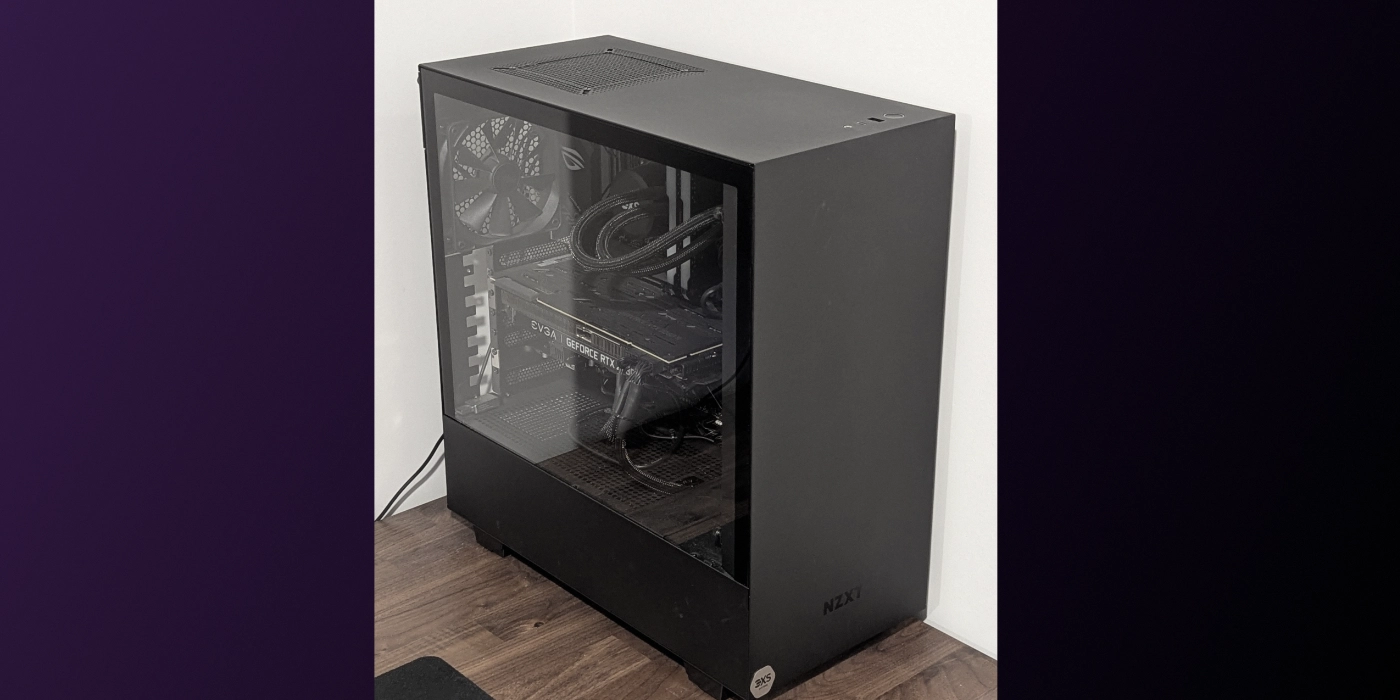
It's 2020 and the old Intel Core i7 3770K is showing it's age. I decide to upgrade to a pre-built 3XS Gamer RTX Ti, from Scan computers.
| Component | Detail |
|---|---|
| CPU | AMD Ryzen 9 3900X 3.8Ghz Socket AM4 |
| RAM | 32GB Corsair Vengeance RGB PRO 3200MHz DDR4 |
| GPU | EVGA GeForce RTX 2080 Ti 11GB Black Edition |
| Storage | 1TB Corsair MP600 PCIe 4.0 M.2 SSD |
| Storage | Western Digital 2TB HDD |
| Motherboard | Asus ROG Strix X570-F Gaming |
| Case | NZXT H500 |
| Cooler | 3XS 240mm AIO Liquid Cooler |
| PSU | Corsair RM650x 640W |
AMD Ryzen 9 9950X
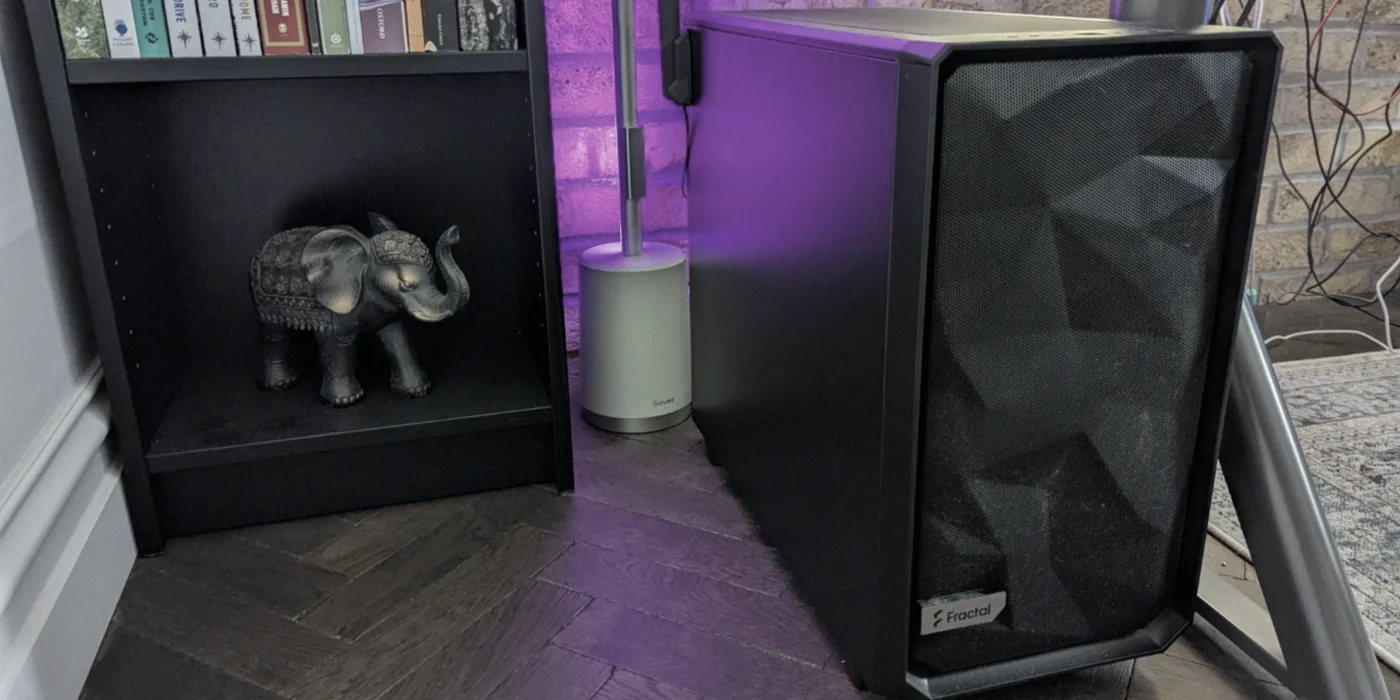
Current system: 3XS Development Box Pro G1-32R
| Component | Detail |
|---|---|
| CPU | AMD Ryzen 9 9950X 4.3Ghx |
| RAM | 64GB Corsair Vengeance 5600MHz DDR5 |
| GPU | GeForce RTX 5090 32GB |
| Storage | 2TB Samsung 990 PRO PCIe 4.0 M.2 SSD |
| Motherboard | ASUS TUF GAMING B650-E WIFI |
| Case | Fractal Design Meshify 2 Black Mid Tower |
| Cooler | Corsair Nautilus 360 RS |
| PSU | Corsair HX1200i 1200W |